All Trolls Must Go!!

As a child my mother would often say, “An empty barrel makes the most noise.”  When I was young, I didn’t fully understand what she meant by this statement.  However, as I got older, and encountered more people on my path to true spirituality, this statement’s meaning became clear.  The trolls who have openly disagreed with us to prove how much they know are empty vessels who suffer with low self-esteem, even though their actions were trying to prove otherwise.


Identifying Characteristics of Trolls

We find trolls in every facet of our lives.  From the bullies in our schools to the career criminals who take pleasure in hurting others without motive, they are literally EVERYWHERE.  On the outside, these people display an unrealistically high self-confidence which lead to their uncontrollable impulses.  Their sense of self-worth becomes exaggerated, leaving them blind to their true hateful nature.

Personally, when I disagree with someone, I turn the channel and search for someone I feel a connection with.  In contrast, trolls will attempt to publicly humiliate the person they disagree with (on their own platform), attempt to infiltrate their organization (knowing they don’t agree with anything they teach), and/or gossip about them because they are jealous. 

Why do Trolls Hate?

Their negative behavior is due to their empty life which is void of real meaning.  It is important to remember there can never be a void in a human being.  Every place must be filled, the difference lies in what you choose to fill your consciousness with.  When you are busy creating and growing spiritually, you don’t have time to troll someone else.    

These types of negative behaviors are typical of those who suffer with low self-confidence.  They experience social withdrawal because of their own feelings of insignificance.  Therefore, they hide under dummy accounts where they can create a virtual identity permitting them room to freely express themselves.  As the authors of confusion, they find comfort in conflicting situations.  These virtual environments stagnate their spiritual growth leaving them unable to recover from low self-esteem.  However, they are the perfect place to hate on others as they are protected from critical eyes.

These people feed off emotional turmoil which results in critical analyzes over new ideas that normal people would never focus on. Their pessimistic mindsets leave them living a stagnant life, void of any real purpose.  This is unfortunate because the troll experiencing low self-esteem will never engage in the much-needed activities that are vital to their existence.  Their unhealthy mental condition impedes them from making healthy decisions.


Dealing with Internet Trolls

Never invite a troll to a group activity or event. –  Their tendency for social withdrawal and lack of trust prohibits them from adequately engaging in true social activities, so they probably won’t attend.

Never attempt to teach a troll – Their disposition prohibits them from taking full advantage of what our society has to offer them, therefore they are unteachable.  

Leave trolls alone – Their social dealings serve more as torture than as a good source of possible enjoyment.  They are better left alone.

Trolls are harbingers of fear – Trolls with low self-confidence recognize the potentials of what social skills might offer them yet they lack the control that will help them conquer their fears.

Never compliment a troll – Many of us think the immediate cure for low self-confidence is to over compliment these people for ANY contribution they make.  This is the wrong thing to do.  Their over-inflated egos will not allow them to accept compliments.  Compliments only play into their delusion of grandeur, thus encouraging their hateful behavior.  


These trolls have absolutely nothing to offer anyone, yet their beliefs will never falter when it comes to their own capacities. They have convinced themselves that they are capable of doing things they have NEVER done and probably NEVER will do.  Therefore, the effective thing to do is to release them from your presence and force them to deal with themselves.  Eventually, they will realize that the only REAL problem in their lives are themselves.  
Storing Food for Long Term Use

Inclement weather and emergency situations are occurring daily worldwide.  The economic downturn is causing the cost of food to increase steadily.  The uncertainty of our economy coupled with the strange weather patterns makes storing a small stockpile of food a very good idea in our present reality.  Inclement weather events, power outages, and other disasters could make finding food outside of your home nearly impossible. Having something to fall back on is a smart and safe plan.


The Long-Term Food Supply 
 
Consider this very realistic scenario: What if you were caught in a long-term power outage due to a severe storm that caused flooding and major damage to roadways?  This type of situation could leave you stuck in your home for weeks.
 
Events such as this, and a long list of other possibilities, has already happened to many who were unprepared.  Don‘t let this happen to you. Having a plan to survive and thrive in any situation, includes having enough food and water to fall back on.  Being proactive will keep you and your family safe and healthy despite a drastic situation.
 
How Much Food Do You Need?
 
Every home should have a minimum of three days’ worth of food and water appropriate for their family size, but having at least two weeks’ worth is preferred. The rule of thumb for water is one gallon of water per person per day and do not forget to count children and pets at up to a full gallon of water each as well. The amount of food will depend on your family, but there should be enough to provide enough calories and nutrition to keep you healthy. At the very minimum, each family member should be able to have at least one full meal per day.
 
What Kinds of Food Should You Store?
 
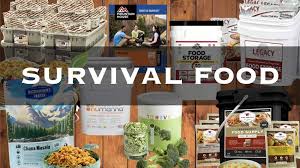
Nutrition is key to your survival.  You will want to stock food that has a minimum of a 3-6 month shelf life and keep that stock rotated so that nothing is spoiled should an emergency occur. Look for canned goods and other non-perishable foods that your family will eat. It will not benefit you to only stock canned foods that your family does not like because then it will be less likely that everyone will consume enough food and get the proper nutrition.  Dehydrated fruits and vegetables, cereals, and bars will come in handy as well. 


Make sure that you store various super-food powders like wheat grass, spirulina, and maca powders.  We offer these and many other types of nutritional supplements in our online store.  These super-food powders can provide you with a massive amount of nutrients in a small portion size, enabling your food to last for a longer amount of time. 
 
Ready to eat canned goods that do not require cooking before consumption, granola bars, dried milk, peanut butter, nuts, and protein bars are all examples of good items to store. Crackers, bread, and similar products are good to keep as well – as long as you keep the stock rotated and keep in mind that they will not last as long as non-perishable items.
 
How to Store Food Items Long Term
 
Have a shelf, closet, pantry, or cellar dedicated to your emergency food storage. Everything in your emergency food supply should be stored in airtight containers and you will want to have extra storage containers and/or zip lock bags to keep opened items in. Keep a list or clearly mark all boxes, cans, and bags with expiration dates and “opened on” dates and keep your stock rotated and free of expired items.
 
Keeping a stockpile of food and water for your family to fall back on in times of need is a responsible part of emergency preparedness. Should a large storm or other disaster occur in your area, you are more likely to be able to survive comfortably for a longer amount of time.
 
 
Learn to Live off Nature
 
In addition to purchasing pre-packaged items, take the time to familiarize yourself with the edible plants that are all around you in nature.  There are many plants that can provide you with more nutrients and energy than you can purchase in a food product that is sold in grocery stores.  Nature grows year-round, so regardless of how long it takes for things to go back to normal, you can survive with an endless supply of nutrition for you and your family.  From various grasses to berries, you can eat like a king for free when you learn how to live off nature. 
 
We offer an Herbalism course in our Mystery school that teaches you how to identify plants that can be used as food sources and as medicine to heal your body.  Learning how to work with nature is an important life skill to have. 
 

Budgeting for Emergency Preparedness

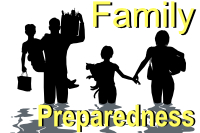
Recently, the American government has been advocating family preparedness ready.  Although I hate to concentrate on the worst-case scenario, it is wise to have some necessary supplies on hand during these unstable times.  If you find yourself in an emergency situation, you want to have a number of supplies that you can fall back on to ensure your survival, health, and safety.  This requires collecting and maintaining a decent amount of personal items even though you may never need them. Altogether, these supplies – including food and water stockpiles, first aid supplies, and even the most basic survival kits, can become quite costly.


Do Your Research

Starting from scratch?  Do some research on emergency preparedness.  There are numerous websites set up to assist you such as The American Red Cross and CDC Emergency Preparedness.  These two sites have lists and ideas of what items you need to build a survival “kit” and items to stockpile for emergencies.  Groupon is another site that offers local deals that can provide you discounts on survival training.  During the Golden Race monthly webinars, we will begin doing some basic training on what you need to survive during the collapse of the beastly system as well.  These meetings are free for our members.  If you are not a member, I highly recommend that you become one.

Once you have an idea of the items you need, research those too. Some items, like food and water, are pretty fool proof. However, other items such as shelter building supplies, weather clothing and gear, and first aid supplies, are not created equal. Knowing what to look for can save you money while also guaranteeing that you have the best products on hand.
Make a List

Before you start shopping, make a detailed list of what items you need for your emergency preparedness or survival kit. Break the list up into sections based on their categories such as sustenance, shelter, first aid, etc…

Shop around to find the lowest prices so that you can save money.  Start buying your items in bulk.  For several years now, people have been benefiting from couponing, and are able to get many items for free by shopping on certain days and doubling the value of the coupons.  For home stockpiles, most experts recommend that you have a minimum of three days’ worth of supplies, but at least two weeks’ worth is preferred.
Start Small

Especially if you are starting from scratch, buying all the items you need at once is not budget friendly. You might have to get one or two items at a time and build up to the full number of items needed.  Check dollar stores for items such as matches, rubbing alcohol, and medical supplies.  You will be surprised how much you can save and purchase for a small amount of money.
Know what Items to Purchase First

Prioritize the list you make based on items that are the most important and most useful. The top three items that I recommend are:

* Water: 
Having enough water stockpiled is one of the most important survival tips. Keep bottled water both in your car and your home. For your home stockpile, the best rule of thumb is to have one gallon of water per person per day.

* First aid: 
A good emergency first aid kit and basic first aid knowledge is another must have item. The American Red Cross has a detailed list of items that should be in any first aid kit. You will need to add or make changes to that list based on your family size and specific medical needs.  If you do not have first aid training, I highly recommend that you invest in a short course as this knowledge may save your life.

* Food: 
The most likely disaster situation involves a severe weather event where you could be stuck in your home for several days without electricity or water. Having a decent stockpile of non-perishable foods to keep you and your family nourished is very wise. 
Maintenance

Basic maintenance will help save you money and keep your survival supplies up to date. Keep your food and water supplies rotating as they come near their expiration dates. That way things can be used rather than thrown out and your items are kept fresh in case of an emergency. Proper maintenance of any tools and other equipment will keep them from needing to be replaced, which will also save you money.
Although I believe that a positive mind can prevent many bad situations from manifesting in your reality, emergency preparedness is a responsible and potentially life-saving skill to have.  However, purchasing the necessary supplies isn’t always cheap unless you know how and when to shop.  You can ensure the safety of your family and your budget with these tips.

Keep These Items in Your Car at All Times

Our planet is in the process of  remodeling itself.  Storms and emergency situations for her inhabitants are a byproduct of this process.  To ensure the safety of both you and your loved ones, I encourage everyone to keep a car survival kit with them at all times, especially if you are driving in remote areas.  Even if you are simply planning a short drive across town, it is wise to have your survival kit with you in case of an accident or emergency.  If you never use it for personal use, who knows when another citizen may need your assistance.


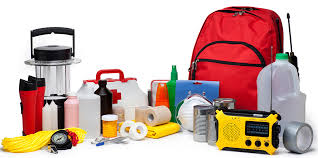
Creating a survival kit at home is simple to do.  There are also many kits available for purchase in outdoor stores and online.  Personally, I recommend creating your own so that you can match the kit to suit your own individual needs and your specific geographical location.  If you decide to purchase the pre-made kits, you can always add a few items to personalize it for your own individual use.
Don’t just buy a survival kit and toss it in the trunk of the car.  Take the time to look over the items in it.  Also, make sure that you research the items so that you know how to properly use them.  It is important that you become familiar with the items before you really need them.  An item that you can’t use effectively is not going to prolong your life in an emergency.

Items that I Highly Recommend:

Always have a flashlight and batteries in your kit.  An extra outfit is also a good idea to keep on hand.  Waterproof matches and candles will come in handy.  Keep a small can in your survival kit to use for collecting drinking water.  Road flares, jumper cables, and a small shovel are valuable tools to have as well.  Keep a small stash of tools handy, such as a hammer, screwdriver, and an adjustable wrench.
A pocket knife or survival knife can be one of the most versatile items to keep with you at all times in your pocket.  Again, learn to use all the features in this particular tool. 
Keep a small supply of dried foods, energy bars, and bottled water in your vehicle.  These food items will provide valuable nourishment to prolong survival until you can get the help you need.                                                              
Snow storms are increasing worldwide, even in areas where snow is not prevalent.  Traveling in cold weather can be extremely dangerous.  Always keep an extra blanket in the car with you at all times.  Spare hats and gloves can help keep you warm and dry in an emergency.  A bag of kitty litter can be helpful during snowy months.  This item can help you to get the traction you need on the snow and ice. 
Having a form of communication is key.  The problem with cell phones is that they must be charged.  Consider keeping a crank-style cell phone charger in your car emergency survival kit.  This item may make it possible to charge your cell phone and call for help in the event of an emergency.


No one ever wants to use a car emergency survival kit, but it can save your life.  Check your kit often to make sure all items are in place.  Replace any items that have been used or removed.  Consider practicing a mock emergency to refresh your memory on how to use some of the items in the kit.  Taking the time to adequately prepare for an emergency can help you to survive in a serious situation