Forbidden Wisdom of the Sacred Sexual Priestess: The Missing Piece of the Goddess

If you’ve ever explored goddess spirituality, you’ve likely encountered the beloved triad: the Maiden, the mother, and the Crone. It’s a beautiful, cyclical framework that mirrors the moon, the seasons, and the stages of a woman’s life. But if you’ve ever sat with it and felt something was… missing… you’re not alone.

Where, in this revered trinity, is the sovereign woman who owns her erotic power not for birth, but for ecstasy? Where is the hierophant of sacred union, the weaver of spells through intimacy, the embodiment of sexuality as a direct path to the divine?

She’s been edited out. And her absence holds a forbidden wisdom we desperately need to reclaim.


The Gap in the Trinity

The Maiden-Mother-Crone archetype, popularized in the 20th century, is overwhelmingly tied to biological and social roles: innocence and potential, nurture and creation, wisdom and release. It’s a powerful narrative, but a sanitized one. In its clean, linear progression, there is no sacred space for the autonomous, sexually potent woman whose power exists for itself.

This isn’t an accident. It’s a reflection of a millennia-old split: the patriarchal division of woman into the Madonna (the sacred, pure Mother) and the Whore (the profane, dangerous seductress). Our modern goddess framework, perhaps unconsciously, upheld this divide by elevating the life-giving Mother and the wise Crone, while leaving the sacred sexual priestess—the “Whore” in her original, holy sense—in the shadows, uninvited to the ritual.

Reclaiming Her True Name: The Enchantress

Let’s be clear: “Whore” is a loaded word, weaponized by centuries of shame. To reclaim her essence, we must look to her ancient titles: the Enchantress, the Sovereign Sexual Priestess, the Hierodule (sacred servant), the Yogini.

Her wisdom is not about commodification, but about consecration. She represents the aspect of the goddess that understands sexuality as:

  • A portal to the divine, a form of embodied prayer.
  • A source of personal sovereignty and magical power.
  • A force of creation that manifests dreams, healing, and transformation—not just children.

She doesn’t fit neatly between Mother and Crone; she exists on a different axis entirely. She is the embodiment of Shakti—the cosmic, creative energy that fuels the universe—flowing freely through a conscious, awakened vessel.

Her Ancient Echoes: History Remembers What We Forgot

While our modern models may omit her, history and mythology are filled with her footprints:

  • Inanna/Ishtar (Sumer/ Babylon): The Queen of Heaven and Earth, goddess of love, war, and political power. Her priestesses performed sacred rites (hieros gamos) to channel her vitality, ensuring the fertility of the land and the legitimacy of the king. Their sexuality was a holy office.
  • The Tantric Yogini (Hinduism/Tantra): In Tantra, the feminine principle (Shakti) is the active, creative force of the universe. The Yogini, often depicted in union with a deity or practitioner, embodies the realization that ecstasy (bliss) and enlightenment (consciousness) are one. Her body is a temple, her pleasure a sacred offering.
  • The Oracle and Seer: In many traditions, like that of the Greek Pythia at Delphi, prophetic trance was often entered through altered states, which some scholars link to erotic or sexual energy as a conduit for divine knowledge.

Why Her Forbidden Wisdom Matters Now

Re-integrating the Sacred Sexual Priestess isn’t just about historical accuracy; it’s a radical act of healing for our collective psyche. Her return offers:

  1. A Re-Sacralization of the Body: She teaches that pleasure is not sinful, but a divine language. The body is not a obstacle to spirit, but its most immediate altar.
  2. A Reclamation of Power: She models sexual autonomy—sexuality as a source of personal spiritual authority, not something given away or defined solely by another.
  3. A Completion of the Circle: Perhaps we need a fourfold goddess: Maiden, Mother, Enchantress, Crone. This creates a more complete map of feminine experience: Potential, Creation, Autonomous Power, and Wisdom.

Inviting Her Back to the Temple

So how do we invite this forbidden wisdom back into our lives? We start by asking questions that challenge the old triad:

  • Where in my life do I experience my sexuality as a source of my own sacred power, separate from partnership or motherhood?
  • How can I view pleasure as a pathway to presence, healing, and connection with something greater?
  • What would it mean to embody the Enchantress—not for another, but for my own spiritual sovereignty?

The Sacred Sexual Priestess has always been here, waiting in the periphery of our myths and the deepest knowing of our cells. She is the missing verse in the hymn of the Goddess. It’s time to listen, to reclaim her forbidden wisdom, and to restore her to her rightful place—not on the margins of our spirituality, but at its pulsing, ecstatic, divine heart.

The trinity is beautiful. But the quartet is whole.

The Great Mother’s Day Ritual

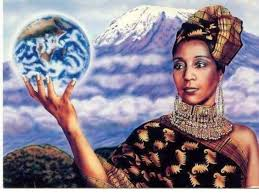
Living in a patriarchy system, it is rare that women are celebrated. Mother’s Day is a time when the divine feminine can freely express herself. As daughters of this spiritual power, it is very important that we tap into her energy to manifest the life of our dreams.

The rise of male-dominated monotheism (exemplified by Yahweh in Judaism, Christianity, and Islam) often overshadowed earlier goddess worship—but traces of the Great Mother lingered in surprising ways. The Egyptian goddess Isis played a particularly fascinating role in this transition, indirectly influencing the development of Abrahamic religions. Here’s how:


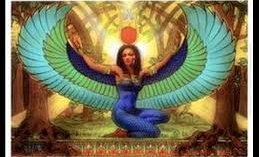
Isis: The Universal Mother Goddess

Before Yahweh became the supreme God of the West, Isis was one of the most widely worshipped deities in the Mediterranean. Her cult spread from Egypt to Greece, Rome, and beyond, thanks to her universal appeal:

  • Goddess of Magic & Resurrection: She reassembled and revived her murdered husband, Osiris, symbolizing triumph over death.
  • Divine Mother: She gave birth to Horus, the savior-king, and was depicted nursing him—an image later echoed in Virgin Mary iconography.
  • Claimed Omnipotence: Inscriptions called her the “One Who Is All” (similar to Yahweh’s “I Am Who I Am”).

By the Hellenistic period (4th–1st century BCE), Isis was syncretized with other goddesses (Aphrodite, Demeter) and even marketed as a single, all-powerful goddess—a step toward monotheism.

I invite you to join us as we honor our Great Mother in a group ritual. This ritual is designed to honor the Divine Feminine, invoke nurturing energy, and establishing a divine connection with the cycles of creation, protection, and transformation. Click the link below for more information.