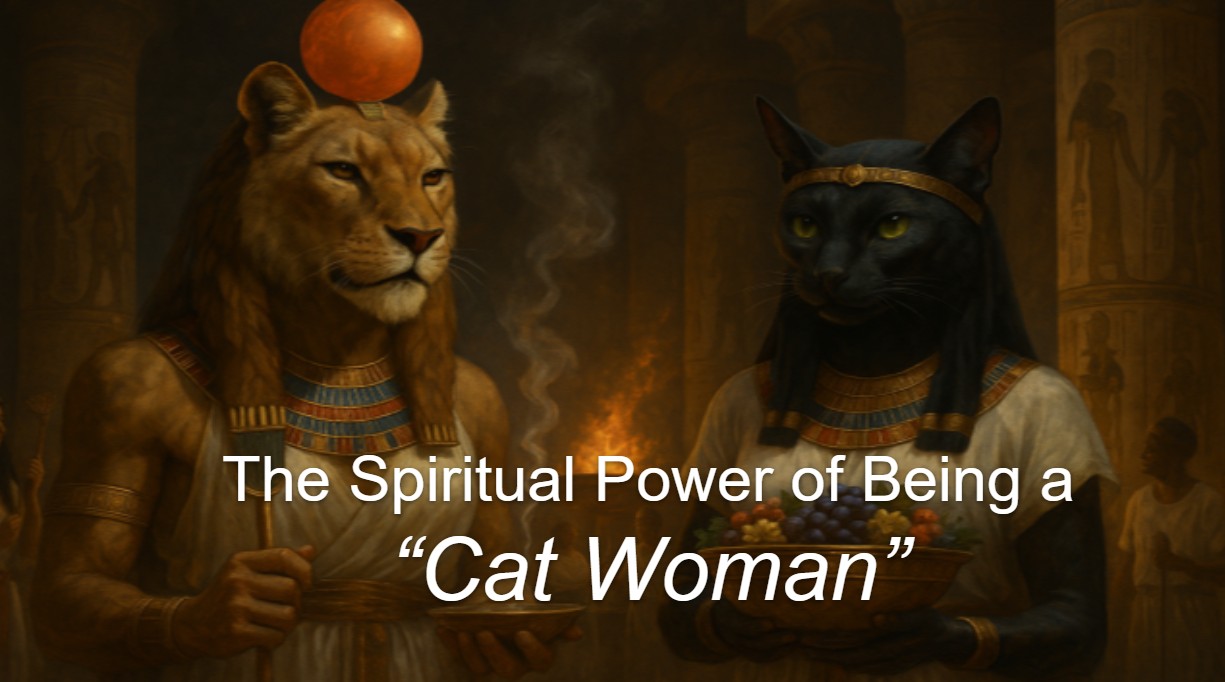
For decades, pop culture has weaponized the term “Cat Woman.” It’s been used to describe the solitary, single woman living with her feline companions—a figure often pitied, mocked, or viewed as someone who has given up on society’s expectations. The implication is always the same: she is lonely, bitter, and incomplete.
But what if we have been looking at this archetype through the wrong lens?
What if the modern “Cat Woman” is actually walking a path of profound spiritual strength, guarded by two of the most powerful deities in the Egyptian pantheon?
To the ancient Egyptians, living in the energy of the cat was not a sign of social failure. It was a sign of divine protection. To embody the feline spirit is to balance the fierce independence of Sekhmet with the nurturing sovereignty of Bastet. It is time to reclaim the “Cat Woman” as a spiritual goal, not a social insult.
The Two Faces of the Feline Divine
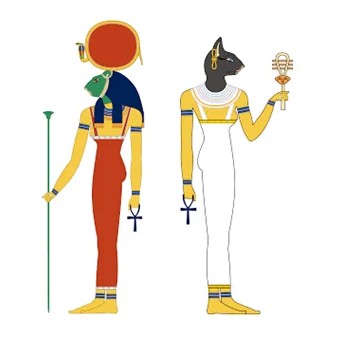
To understand why the Cat Woman is a spiritual powerhouse, we have to look at the two goddesses who rule this archetype.
1. Bastet: The Protector of the Home
Bastet began as a lioness warrior but evolved into the goddess of home, fertility, joy, and domesticity. She is the energy of a cat lounging in a sunbeam—relaxed, warm, and content, but hyper-aware of every shift in the room.
The Spiritual Lesson: A woman aligned with Bastet knows that her home is her sanctuary. She does not need validation from the outside world because she has created a sacred space of peace within. The “Cat Woman” is often accused of being a “homebody,” but spiritually, this is guarding her energy. She is selective about who enters her temple. She is not lonely; she is protected. Bastet teaches that solitude is not emptiness—it is the fertile ground where joy and self-love grow.
2. Sekhmet: The One Who Roars
Sekhmet is the “Eye of Ra”—the lioness of wrath, vengeance, and divine destruction. She is the cat’s claws, not just her purr. Sekhmet represents the absolute refusal to be disrespected, controlled, or diminished.
The Spiritual Lesson: The “Cat Woman” stereotype often implies a woman who has “failed” at relationships. But the Sekhmet archetype suggests the opposite: she is a woman who has chosen to walk away from toxicity. She has learned to roar. In a world that pressures women to be agreeable and nurturing at all costs, the Cat Woman has invoked Sekhmet’s fire. She would rather be alone than be abused. She would rather be called “scary” than be unsafe. That is not a failure; that is spiritual mastery.
Why Solitude Is Actually Sovereignty
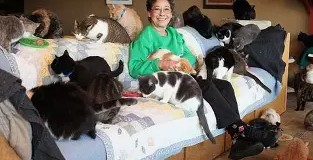
Society frowns upon the Cat Woman because she breaks the unspoken rule: A woman’s value is tied to her domestic availability to others.
When a woman prioritizes her peace over partnership, or her cats over children, she is committing a radical act of sovereignty. She is saying, “I am the center of my own universe.”
Bastet did not need a consort to define her temple. Sekhmet did not ask permission to destroy what threatened Ma’at (cosmic order). The Cat Woman walks in their footsteps. Her cats are not “substitutes” for children; they are living embodiments of Bastet’s grace and Sekhmet’s silent vigilance. They remind her daily that affection given on her terms is the only kind worth having.

The Alchemy of the Cat Woman
The true spiritual secret is that the Cat Woman has learned to alchemize the two goddesses.
- Like Bastet, she creates a warm, joyful, peaceful nest. She sleeps well. She plays. She dances in her living room with no one watching.
- Like Sekhmet, she has a fierce boundary. Knock without permission, and you will see the lioness. She is not “mean.” She is armed.
In a toxic culture that often demands women perform exhaustion, the Cat Woman performs restoration. She is not hiding from the world. She is recharging so that when she does engage, she brings the full force of the divine feminine—nurturing but unbending, loving but lethal.
A New Definition
So, let us redefine the goal.
To be a “Cat Woman” is not to be a spinster. It is to be a Priestess of Bastet-Sekhmet. It means you have moved past the desperate energy of seeking validation and into the sovereign energy of knowing your worth.
You do not need to be rescued. You have the sunbeam. You have the claws. And if the world frowns upon you for it? Let them.
Sekhmet didn’t mind the frowns of her enemies. And Bastet was too busy purring to care.
Embrace the litter box. Embrace the roar. You are in very good company.

