Forbidden Wisdom of the Sacred Sexual Priestess: The Missing Piece of the Goddess

If you’ve ever explored goddess spirituality, you’ve likely encountered the beloved triad: the Maiden, the mother, and the Crone. It’s a beautiful, cyclical framework that mirrors the moon, the seasons, and the stages of a woman’s life. But if you’ve ever sat with it and felt something was… missing… you’re not alone.

Where, in this revered trinity, is the sovereign woman who owns her erotic power not for birth, but for ecstasy? Where is the hierophant of sacred union, the weaver of spells through intimacy, the embodiment of sexuality as a direct path to the divine?

She’s been edited out. And her absence holds a forbidden wisdom we desperately need to reclaim.


The Gap in the Trinity

The Maiden-Mother-Crone archetype, popularized in the 20th century, is overwhelmingly tied to biological and social roles: innocence and potential, nurture and creation, wisdom and release. It’s a powerful narrative, but a sanitized one. In its clean, linear progression, there is no sacred space for the autonomous, sexually potent woman whose power exists for itself.

This isn’t an accident. It’s a reflection of a millennia-old split: the patriarchal division of woman into the Madonna (the sacred, pure Mother) and the Whore (the profane, dangerous seductress). Our modern goddess framework, perhaps unconsciously, upheld this divide by elevating the life-giving Mother and the wise Crone, while leaving the sacred sexual priestess—the “Whore” in her original, holy sense—in the shadows, uninvited to the ritual.

Reclaiming Her True Name: The Enchantress

Let’s be clear: “Whore” is a loaded word, weaponized by centuries of shame. To reclaim her essence, we must look to her ancient titles: the Enchantress, the Sovereign Sexual Priestess, the Hierodule (sacred servant), the Yogini.

Her wisdom is not about commodification, but about consecration. She represents the aspect of the goddess that understands sexuality as:

  • A portal to the divine, a form of embodied prayer.
  • A source of personal sovereignty and magical power.
  • A force of creation that manifests dreams, healing, and transformation—not just children.

She doesn’t fit neatly between Mother and Crone; she exists on a different axis entirely. She is the embodiment of Shakti—the cosmic, creative energy that fuels the universe—flowing freely through a conscious, awakened vessel.

Her Ancient Echoes: History Remembers What We Forgot

While our modern models may omit her, history and mythology are filled with her footprints:

  • Inanna/Ishtar (Sumer/ Babylon): The Queen of Heaven and Earth, goddess of love, war, and political power. Her priestesses performed sacred rites (hieros gamos) to channel her vitality, ensuring the fertility of the land and the legitimacy of the king. Their sexuality was a holy office.
  • The Tantric Yogini (Hinduism/Tantra): In Tantra, the feminine principle (Shakti) is the active, creative force of the universe. The Yogini, often depicted in union with a deity or practitioner, embodies the realization that ecstasy (bliss) and enlightenment (consciousness) are one. Her body is a temple, her pleasure a sacred offering.
  • The Oracle and Seer: In many traditions, like that of the Greek Pythia at Delphi, prophetic trance was often entered through altered states, which some scholars link to erotic or sexual energy as a conduit for divine knowledge.

Why Her Forbidden Wisdom Matters Now

Re-integrating the Sacred Sexual Priestess isn’t just about historical accuracy; it’s a radical act of healing for our collective psyche. Her return offers:

  1. A Re-Sacralization of the Body: She teaches that pleasure is not sinful, but a divine language. The body is not a obstacle to spirit, but its most immediate altar.
  2. A Reclamation of Power: She models sexual autonomy—sexuality as a source of personal spiritual authority, not something given away or defined solely by another.
  3. A Completion of the Circle: Perhaps we need a fourfold goddess: Maiden, Mother, Enchantress, Crone. This creates a more complete map of feminine experience: Potential, Creation, Autonomous Power, and Wisdom.

Inviting Her Back to the Temple

So how do we invite this forbidden wisdom back into our lives? We start by asking questions that challenge the old triad:

  • Where in my life do I experience my sexuality as a source of my own sacred power, separate from partnership or motherhood?
  • How can I view pleasure as a pathway to presence, healing, and connection with something greater?
  • What would it mean to embody the Enchantress—not for another, but for my own spiritual sovereignty?

The Sacred Sexual Priestess has always been here, waiting in the periphery of our myths and the deepest knowing of our cells. She is the missing verse in the hymn of the Goddess. It’s time to listen, to reclaim her forbidden wisdom, and to restore her to her rightful place—not on the margins of our spirituality, but at its pulsing, ecstatic, divine heart.

The trinity is beautiful. But the quartet is whole.

The Sacred Shift: Why 2026 is the Year to Decenter Men & Reclaim Your Spiritual Wholeness

If your spiritual journey has ever felt like a winding path that somehow, subtly, keeps circling back to men—their approval, their guidance, their presence, or their absence—you are not alone. For generations, the spiritual blueprint for women has been quietly but powerfully oriented around the masculine: seeking the divine father, following male teachers, yearning for a sacred partnership to feel complete, or shaping our healing around wounds inflicted by men.

In 2026, a profound and collective invitation is being extended. It’s time for a sacred shift. It’s time to decenter men from our spiritual center.

This isn’t about bitterness, exclusion, or declaring war. It is about a conscious, compassionate, and radical act of reorientation. It is about placing your own divine feminine essence—your intuition, your creativity, your cyclical wisdom, your boundless capacity to nurture and transform—at the very core of your spiritual universe.

Why Now? Why 2026?

We stand at a potent intersection. Societally, we are unraveling ancient patriarchal systems. Spiritually, there is a massive resurgence of practices rooted in earth wisdom, intuitive healing, and the divine feminine. Energetically, the need for balance has never been more critical. Continuing to orbit around masculine energy—even in its most enlightened forms—keeps us off our own axis. 2026 represents a threshold, a year to move from theory to lived practice.

What Decentering Men Actually Looks Like in Your Spiritual Life

  1. Divine Source as Beyond Gender: Begin to relate to the Source, the Universe, the Great Mystery, or God/Goddess beyond a primarily father-figure construct. Explore the Mother, the Crone, the Non-Binary Divine. Let your connection be direct, personal, and unmediated by a masculine lens.
  2. Seek Female & Non-Binary Mentors: Intentionally diversify your spiritual influences. Listen to the philosophers, mystics, poets, and healers who are women, queer, and gender-nonconforming. Whose wisdom has been sidelined? Go find them. Their teachings resonate with a different frequency—one that often speaks directly to the soul of a spiritual woman.
  3. Re-frame “Sacred Union”: The most critical sacred union is the one within you—the marriage of your own inner masculine and feminine principles (assertiveness/receptivity, action/being, logic/intuition). Cultivating this inner wholeness means you seek partnership from a place of desire, not completion. A partner becomes a blessed complement to your already-complete spiritual self.
  4. Make Your Womb Space (Literal or Energetic) Your Altar: For those who have one, your womb is a center of immense creative and intuitive power, regardless of whether you bear children. For all, the sacral chakra and pelvic bowl hold this energy. Decentering men means turning your primary spiritual attention inward to these spaces—honoring their cycles, listening to their wisdom, and protecting their energy as sacred ground.
  5. Release the “Healing-for-Him” Narrative: So much of our shadow work, therapy, and healing is framed around trauma caused by men: father wounds, partner wounds, societal oppression. While this healing is vital, 2026 calls us to also explore the joys, powers, and mysteries that exist independent of that pain. What are you healing for? Not just to be free from him, but to be fully for yourself and for the world.

The Liberating Outcomes

When you make this shift, magic happens:

  • Your intuition becomes your primary gospel. You stop outsourcing your truth.
  • Your creativity unlocks. Energy previously spent managing, anticipating, or seeking masculine approval is reclaimed for your own art, projects, and passions.
  • Your relationships transform. You engage with men (romantically or otherwise) from a place of centered choice, not need or ancestral patterning.
  • You claim your spiritual authority. You no longer need a priest, a guru, or a partner to validate your connection to the divine. You are your own high priestess.

This is the year to stop asking for a seat at a table built on a foundation not your own. It’s time to build your own temple, with the altar dedicated to the wild, wise, and whole woman you are.

The journey inward is the most revolutionary pilgrimage of 2026. It’s not about leaving men behind; it’s about walking so deeply into your own truth that you meet everyone and everything from a place of unshakable, spiritually sovereign power.

Your wholeness is waiting. Center it.

The Sacred Space: 10 Unexpected Benefits of Living in a Man-Free Home as a Spiritual Single Woman

In a world that often prioritizes partnership, choosing a life of solo serenity can feel like a radical act—especially for women. For the spiritual single woman, a home without male presence isn’t an empty space waiting to be filled; it’s a temple, a canvas, and a sanctuary consciously curated for her own evolution. Here are ten profound benefits of living in a man-free home when your life is dedicated to spiritual growth.

1. Uninterrupted Energetic Sovereignty

Your home’s energy is yours alone to cultivate. Without the need to blend or compromise with another person’s (often unconscious) energetic field, you can create a vibration that perfectly supports your spirit. You decide if the space feels like a meditative ashram, a creative studio, or a nurturing cocoon—and you can change it daily, intuitively, without explanation.

2. The Ultimate Altar Freedom

Every surface can be a sacred space if you wish. Your spiritual practice isn’t confined to a corner; it can flow throughout your home. Leave your crystals in the sunlight, your journal open on the table, and your incense burning without worrying about disrupting someone else’s routine or belief system. Your home becomes a living, breathing extension of your inner world.

3. Deepened Self-Intimacy & Listening

In the profound quiet, you learn to hear your own voice—not as an echo, but as a clear, guiding wisdom. Without the distraction of another’s needs or opinions, you tune into your own cycles, desires, and intuitions with startling clarity. This self-intimacy becomes the bedrock of your spiritual connection.

4. Unapologetic Ritual & Routine

Your daily rhythm aligns solely with your soul’s needs. Wake for sunrise meditation, practice moon rituals at midnight, or spend Saturday in silent contemplation. Your schedule serves your spirit, not a compromise. This autonomy in routine is a powerful form of self-respect and spiritual discipline.

5. Financial Energy Directed by Your Values

Your financial resources flow toward what you deem sacred. This might mean investing in healing courses, filling your home with art that inspires you, donating to causes you believe in, or simply enjoying the peace of mind that comes from financial independence directed by your own conscience.

6. A Classroom for Self-Reliance

Every fixed leak, assembled piece of furniture, and managed household decision becomes a lesson in your own capability. This practical self-reliance builds a powerful, grounded confidence that directly translates to spiritual empowerment. You learn you are both the visionary and the builder of your life.

7. The Luxury of Unedited Expression

Feel like dancing wildly to drum music at 10 AM? Weeping during a beautiful film? Laughing out loud to a podcast? Your emotional and expressive landscape is free to flow without moderation or the need to manage someone else’s reaction. This emotional freedom is fertile ground for authenticity.

8. Conservation of Social & Energetic Energy

As an empathetic, spiritual woman, you may naturally give energy in relationships. Your home becomes a guaranteed place of recharge, where no social or emotional labor is required. This conserved energy can be poured directly back into your practices, creativity, and service to the world.

9. A Direct Relationship with the Divine

Without a human partner as a primary intermediary, your relationship with the Universe, God, Goddess, or your Higher Power becomes direct and unfiltered. You learn to receive guidance, comfort, and love from the Source itself, deepening a trust that is entirely your own.

10. Living as Your Own Complete Archetype

You move beyond society’s script. You are not the Maiden waiting, the Wife, or the Mother. You get to define your own wholeness. You might be the Oracle, the Mystic, the Creator, the Healer, or the Sovereign Queen of your own domain. Your home is the physical kingdom where this archetype lives and breathes.


A Final Reflection:

This isn’t about rejection, but about profound selection. Choosing a man-free home as a spiritual single woman is about selecting yourself as your primary commitment. It’s a brave and beautiful container for becoming the woman you are meant to be—on your own terms, in your own time, surrounded by the sacred peace you have consciously created.

Your space is not empty. It is full of you, your spirit, and infinite possibility.

Witches – A Halloween Tribute

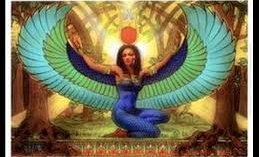
The Witch and the Goddess Isis: A Historical and Symbolic Connection

The spiritual history of witches is deeply rooted in ancient pre-Christian traditions, where individuals, often women, served as healers, midwives, and spiritual guides within their communities. These figures were believed to possess a deep connection to the natural world and the cycles of the earth, which they accessed through herbs, rituals, and divination. In many pagan societies, such as those of the Celts and Greeks, these wise women or oracles were respected for their knowledge of medicine and the sacred. Their practices were intrinsically tied to a polytheistic worldview that saw the divine as immanent in nature. Therefore, the spiritual role of the “witch” was originally one of community service and spiritual intermediation.

Tracing back, the link began during Hellenistic times – later with Rome – as people across the Mediterranean honored Isis as a major goddess connected to potent magic, ruling power, and hidden wisdom. The well-known story tells how she skillfully employed strong magic to put her slain husband, Osiris, back together; subsequently, she safeguarded their child, Horus, from danger. She became the image of a godlike spellcaster, someone using otherworldly abilities to get results. Consequently, this idea shaped how people viewed – then practiced – ritual magic, eventually linking it to what we now call witchcraft.

As witch hunts swept through Europe, traditional scholarship still mattered. Those studying demons – often well-educated people – sometimes highlighted pre-Christian gods such as Isis, claiming witches worshipped these “fake gods.” Church leaders saw reverence for figures like Isis not as simple belief, but rather as idol worship or service to the Devil. Isis, once a strong goddess, became a target. Her power – her freedom, her magic – served to paint accused witches as evil. So, the old, honored deity got swept up in stories about wicked women.

Now, a clear connection appears when looking at today’s renewed interest in witchcraft alongside Pagan beliefs – especially Wicca and honoring goddesses. These paths intentionally bring back gods and goddesses worshipped before Christianity. Within them, Isis frequently gains respect as a key face of the “Triple Goddess,” or the Great Mother, representing the fullness of the lunar cycle also mirroring a strong, sovereign ruler. These days, quite a few witches call on Isis during spell work, drawn to her gifts of safeguarding, mending, change, also secret knowledge. They see her not as something frightening, rather as a guiding spirit – a goddess showing how potent a witch might become, both skillful yet kind.

Isis’s story – grieving widow, devoted mom, determined truth-seeker – mirrors the witch, both emblems of female strength alongside hidden wisdom. They navigate worlds built by men, relying on smarts moreover secret arts to get things done. Now, the modern witch echoes Isis – a free spirit grasping cosmic rules, unafraid to wield them. Consequently, Isis feels like a foremother to lots of witches today.

Once celebrated as a goddess of enchantment, Isis shifted over time – vilified then embraced anew. This journey mirrors that of the witch herself. Because Isis represents an original, strong woman wielding power, she gifts witchcraft with deep roots and respectability. So, acknowledging Isis feels like tapping into magic’s very first sources.

In honor of the great mother, I am hosting a month-long ritual training boot camp starting the first week of January 2026. Embark on a transformative four-week journey to awaken your inner priestess and reconnect with the ancient power of the divine feminine. My Isis Ritual Boot Camp is a dedicated container for women to explore the profound spiritual technologies of the renowned Egyptian goddess, Isis. You will learn to master foundational practices drawn from her myths, including the creation of sacred space, the crafting of potent invocations, and the use of ritual tools for healing and personal empowerment. Through guided sessions, we will delve into the archetypes of the Magician and the Sovereign Queen, teaching you how to integrate these energies into your modern life. This intensive program is designed to provide you with a tangible spiritual toolkit, fostering a deep, personal connection with Isis to cultivate resilience, wisdom, and magical authority.

Don’t delay…..Register TODAY!

Marriage is a Humiliation Ritual

Humiliation rituals are more than just cruel or uncomfortable moments—they’re structured practices designed to degrade, embarrass, or shame individuals or groups. Often disguised as tradition, discipline, or loyalty tests, these rituals can serve a range of purposes, from enforcing hierarchy to breaking someone’s spirit. But behind their many forms lies a common thread: control.

Let’s explore what humiliation rituals are, where they occur, their psychological consequences, and how they’ve been embedded in cultures throughout history.


What Is a Humiliation Ritual?

At its core, a humiliation ritual is a deliberate act meant to strip someone of dignity. It’s often used to:

  • Punish or discipline
  • Initiate someone into a group
  • Enforce conformity or obedience
  • Assert dominance or maintain a hierarchy

Unlike spontaneous bullying or random acts of cruelty, humiliation rituals are intentional and often repeated, normalized, or even institutionalized.


Common Settings for Humiliation Rituals

1. Hazing and Initiations
In some fraternities, military units, or sports teams, new members undergo degrading tasks or challenges to “prove” their worth. These rituals are often justified as bonding experiences but can veer into physical or emotional abuse.

2. Workplace and Institutional Abuse
Toxic corporate environments, cults, or authoritarian institutions may use public scolding, isolation, or humiliation tactics to reinforce submission and discourage dissent.

3. Public Shaming
Historically, punishments like the stocks or the pillory were designed to shame offenders in front of a crowd. Today, online “cancel culture” can act as a digital version—turning social media into a public square of judgment.

4. Interpersonal Abuse
In toxic relationships, one partner may humiliate the other—publicly or privately—as a way to maintain control. Over time, this can erode the victim’s sense of self and autonomy.

5. Religious or Cultural Practices
Some traditions incorporate elements of shame or public penance. For example, public acts of atonement or confession may be part of a ritual meant to humble the individual, though the intent can vary widely across cultures.


The Psychological Impact

Humiliation rituals can leave deep and lasting psychological scars. Common effects include:

  • Post-Traumatic Stress Disorder (PTSD)
  • Loss of self-worth and identity
  • Learned submission or over-compliance
  • Long-term resentment or desire for revenge

Far from being “character-building,” these rituals often result in emotional damage that can take years to undo, if ever.


Historical and Cultural Examples

To understand how deeply rooted these rituals are, consider these examples:

  • Roman Triumphs: Victorious generals paraded defeated enemies through the streets in chains—a celebration for some, a ritual humiliation for others.
  • The Scarlet Letter: Nathaniel Hawthorne’s fictional tale of a woman forced to wear a red “A” for adultery was based on real practices of public shaming in Puritan society.
  • Military “Blanket Parties”: In some armed forces, this form of hazing involves physically attacking a fellow soldier under a blanket—used as punishment or discipline.
  • Marital Dynamics: In some relationships, rituals of humiliation (verbal belittling, forced apologies, or denial of dignity) become regular tools of power and control.

A Deeper Look: Marriage and Relationships

Humiliation doesn’t always come with ceremony. In relationships, especially abusive ones, humiliation can be a daily ritual. Name-calling, gaslighting, or being ridiculed in front of others are all methods abusers use to chip away at a partner’s confidence. These patterns don’t just harm—they isolate, condition, and control.


Final Thoughts

Humiliation rituals are often hidden in plain sight—wrapped in tradition, disguised as discipline, or justified as character tests. But their effects are real and often deeply harmful.

Recognizing these patterns, whether in historical analysis or daily life, is a first step toward breaking them. Whether in institutions, relationships, or online spaces, we need to question traditions that thrive on shame and start building cultures rooted in respect.


The Great Mother’s Day Ritual

Living in a patriarchy system, it is rare that women are celebrated. Mother’s Day is a time when the divine feminine can freely express herself. As daughters of this spiritual power, it is very important that we tap into her energy to manifest the life of our dreams.

The rise of male-dominated monotheism (exemplified by Yahweh in Judaism, Christianity, and Islam) often overshadowed earlier goddess worship—but traces of the Great Mother lingered in surprising ways. The Egyptian goddess Isis played a particularly fascinating role in this transition, indirectly influencing the development of Abrahamic religions. Here’s how:


Isis: The Universal Mother Goddess

Before Yahweh became the supreme God of the West, Isis was one of the most widely worshipped deities in the Mediterranean. Her cult spread from Egypt to Greece, Rome, and beyond, thanks to her universal appeal:

  • Goddess of Magic & Resurrection: She reassembled and revived her murdered husband, Osiris, symbolizing triumph over death.
  • Divine Mother: She gave birth to Horus, the savior-king, and was depicted nursing him—an image later echoed in Virgin Mary iconography.
  • Claimed Omnipotence: Inscriptions called her the “One Who Is All” (similar to Yahweh’s “I Am Who I Am”).

By the Hellenistic period (4th–1st century BCE), Isis was syncretized with other goddesses (Aphrodite, Demeter) and even marketed as a single, all-powerful goddess—a step toward monotheism.

I invite you to join us as we honor our Great Mother in a group ritual. This ritual is designed to honor the Divine Feminine, invoke nurturing energy, and establishing a divine connection with the cycles of creation, protection, and transformation. Click the link below for more information.

Chaos Spirits

Chaos spirits are mischievous tricksters and malevolent forces of destruction.  They are supernatural entities that embody chaos and disorder; typically characterized by their unpredictable nature and the ability to disrupt the natural order of things.  

These entities have powers that allow them to manipulate reality, create confusion, or incite conflict. They are often associated with elements like storms, wildfires, or other natural phenomena that are chaotic and uncontrollable.  Our earth is currently being overrun with these entities.  Learning more about them can save you from a lifetime of unnecessary suffering.

Characteristics of Chaos Spirits

1. Unpredictability: Chaos spirits are known for their erratic and unpredictable behavior, making them difficult to understand or anticipate.

2. Shapeshifting: They often can change their form at will, taking on different appearances to suit their needs or whims.

3. Elemental Affinity: Many chaos spirits are associated with elements like fire, wind, or shadow, reflecting their volatile nature.

4. Mischievousness: They are tricksters, delighting in causing confusion and disorder for their amusement.

5. Immortality: Chaos spirits are ageless and cannot be killed by conventional means, though they might be banished or contained.

6. Influence Over Minds: Some chaos spirits have the power to manipulate thoughts and emotions, sowing discord and chaos in the minds of others.

7. Resistance to Order: They often resist or disrupt structures of order and control, thriving in environments of chaos and anarchy.

8. Dual Nature: Chaos spirits might embody both creation and destruction, capable of bringing about new beginnings or tearing down the old.

9. Connection to the Unknown: They are linked to the mysterious and the unknown, representing the untamed aspects of the universe.

10. Symbolism: In many cultures, chaos spirits symbolize change, transformation, and the potential for both growth and destruction.

Protecting yourself from chaos spirits often involves a combination of spiritual, magical, and practical measures. Here are some common methods:

Protective Charms and Talismans: Charms or talismans can ward off chaotic or malevolent spirits. These might be inscribed with protective symbols or made from specific materials believed to repel chaos.

Salt Circles: Salt is a purifying substance that can create a barrier against spirits. Creating a circle of salt around yourself or your home is a common protective measure.

Sacred Symbols and Sigils: Using symbols that are considered sacred or powerful in a particular tradition can help protect against chaos spirits. These might be drawn, worn, or placed in strategic locations.

Rituals and Incantations: Performing specific rituals or reciting incantations is an effective way to invoke protection from higher powers or to banish chaotic entities.

Iron and Silver: Iron and silver are believed to have protective properties against spirits. Carrying or wearing these metals might offer some protection.

Holy Water and Blessed Objects: Items that have been blessed or consecrated, such as holy water, can be used to protect against or drive away chaos spirits.

Spiritual Cleansing: Regularly cleansing your space with smoke from sage, incense, or other purifying herbs can help keep chaotic energies at bay.

Mental and Emotional Fortitude: Maintaining a strong and positive mental state is important, as chaos spirits are sometimes thought to feed on fear and negativity.

Allies and Guardians: Calling upon spiritual allies or guardian spirits for protection can be effective. These include ancestors, deities, or other benevolent entities.

Avoidance and Awareness: Being aware of places or situations where chaos spirits dwell and avoiding them can be a practical form of protection.

If would like to learn how to protect yourself from chaotic spirits, I encourage you to take my on-demand Spiritual protection course or schedule a one-on-one consultation today!

Tune into the Real Talk Podcasts

When we created the Golden Race radio station, it was with the sole purpose of reaching the masses.  Although we enjoy posting videos on social media sites, they are micromanaged and heavily censored resulting in forceful blocking and removal of our content.  The radio station gave us a platform to freely discuss issues that affects the Golden Race, however, it was hard to access, so we canceled it.  In place of the radio station, we have created Real Talk podcasts that are now on many major platforms.  If you enjoyed our videos and articles, you will love our podcasts!   

Cancelling the radio station was a decision we made primarily because of accessibility, listenership, and lack of participation.  The station played continuously 365 days per year 24 hours per day and content had to be uploaded regularly.  It took a lot of my personal time and effort to keep it operating for the past year.  After careful consideration, I decided the only content we should provide to the public at large is our Real Talk discussions in the form of podcasts.  I noticed most of our listeners were tuning in when our Real Talk episodes aired, so it made sense to only focus on our radio show instead of providing an entire radio station.

I am very pleased with the results of our Real Talk podcasts.  For me and many of our listeners, it is a win-win situation as it is easier for me to manage and for listeners to access.  Our listeners can now hear us on demand 365 days per year, 24 hours per day on various major platforms.  You can listen on iHeart Radio, TuneIn, Spotify, myTuner Radio, on our website, or through an RSS feed.  We also have links on our blog, in our online store, and in the community tab.  We are working on getting the show added to several other major platforms.  We will update everyone as it is added to additional sites.

Sorry! This product is not available for purchase at this time.

 Although I thoroughly enjoyed having the radio station, it was not easily accessible for many potential listeners.  Our Real Talk podcasts can now reach millions of listeners who will enjoy the information we are presenting.   Shows can be shared on social media sites and via direct website links.  Many of these applications are already installed or can be installed on both android and apple devices.  If you have not tuned in to our podcasts, I highly recommend you do so and make sure you follow us, so you stay in the KNOW.

Our podcasts will include audio from many sources that most of our subscribers and members have never heard or may have forgotten.  Eventually, we will host live discussions where our listeners can call in and ask questions, so make sure you subscribe and follow.  These new platforms will help us reach our goal of assisting our listeners with their spiritual growth and development.